Industrial - Bachelor

Empathetic Design in Humanoid Robotics

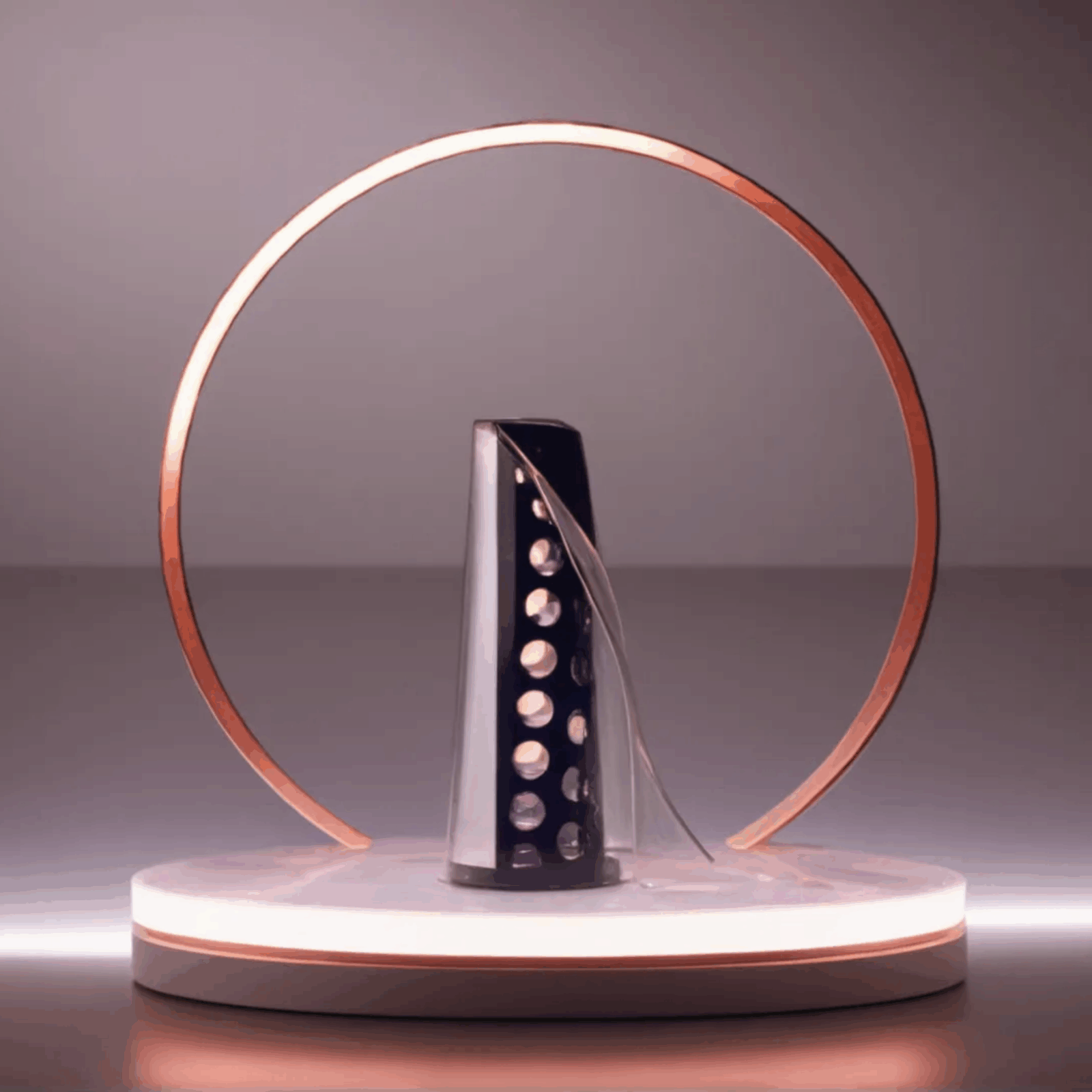
The successful integration of humanoid robots into domestic environments hinges not only on their technical performance but critically on their acceptance by human occupants. This project investigated how strategic application of colour, material, and finish in a robot’s cladding can foster human comfort, trust, and emotional connection, moving beyond traditional industrial aesthetics.

Background

As humanoid robots become a fixture in domestic spaces such as kitchens and living areas, their success depends on more than technical performance. Movement fluidity and AI competence matter, but acceptance ultimately rests on how humans feel about them; CMF strongly influence these feelings.

Theories such as Masahiro Mori’s uncanny valley (1970) show that robots which appear almost human can trigger unease when appearance and behaviour do not align. Hanson (2006) extends this by proposing an aesthetic continuum, in which design can strategically balance realism and abstraction to maintain trust.

Other scholars emphasise tactile interaction: Sabanovic (2010) demonstrates how soft silicone skin, textile joints, and layered surfaces enhance warmth and empathy in human–robot interaction. DiSalvo et al. (2002) further highlighted the need for alignment between physical form and behavioural cues.

We asked one question – What if robots could feel familiar, not foreign?

BENCHMARKING & RESEARCH

Unlike many competitors that emphasise either mechanical transparency (exposed actuators, visible gears) or neutral minimalism (appliance-like shells), this project prioritises emotionally intelligent CMF. The design concept blends biomimicry with soft-touch textiles and flexible connectors, encouraging tactile interaction “touch to trust” and aligning form with movement. This CMF-driven expressivity remains underexplored in current benchmarks.

Key theoretical grounding:
• Masahiro Mori’s uncanny valley (1970) shows that robots falling between human and machine appearances evoke unease.
• David Hanson (2006) demonstrates that expressive facial features (e.g., Sophia, Pepper) increase bonding and trust.
• DiSalvo et al. (2002) highlight the need for alignment between materiality and behavioural cues.
• Sabanovic (2010) provides evidence that tactile softness (e.g., textile joints, silicone skins) enhances warmth and social acceptance.

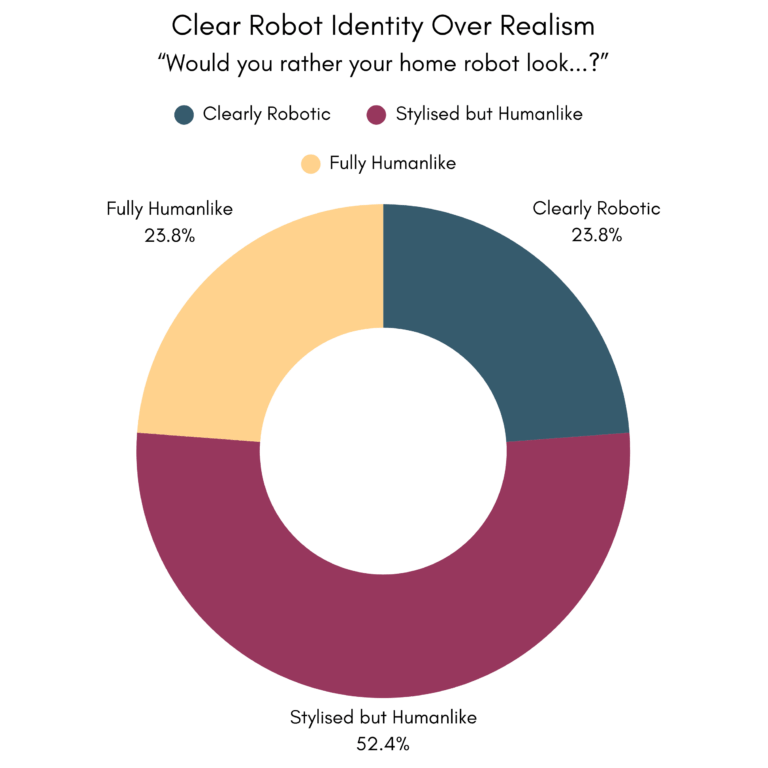
The image is a pie graph showing how robotic/humanlike the robot should look.

- Fully Humanlike = 23.8%
- Clearly Robotic = 23.8%
- Stylised but humanlike = 52.8%

Research into Materials for Robots

Research findings showed a consistent preference for humanoid robots that embody warmth and emotional accessibility through CMF choices. Participants rejected glossy plastics and metallic finishes as cold or untrustworthy, while soft materials, muted tones, and fabric accents were consistently described as safer and more comfortable.

Key Insights
* Users reject glossy/industrial finishes (sterile, unsafe).
* Soft textiles, muted tones = described as “warm” and “safer.”
* Cultural + modularity elements increase acceptance and personalisation.
* Robots should look robotic but approachable (avoid uncanny valley).
Name
Empathetic Design in Advanced Humanoid Robotics
File Type
application
File Size
2 MB
Download File

Design Development & Prototyping

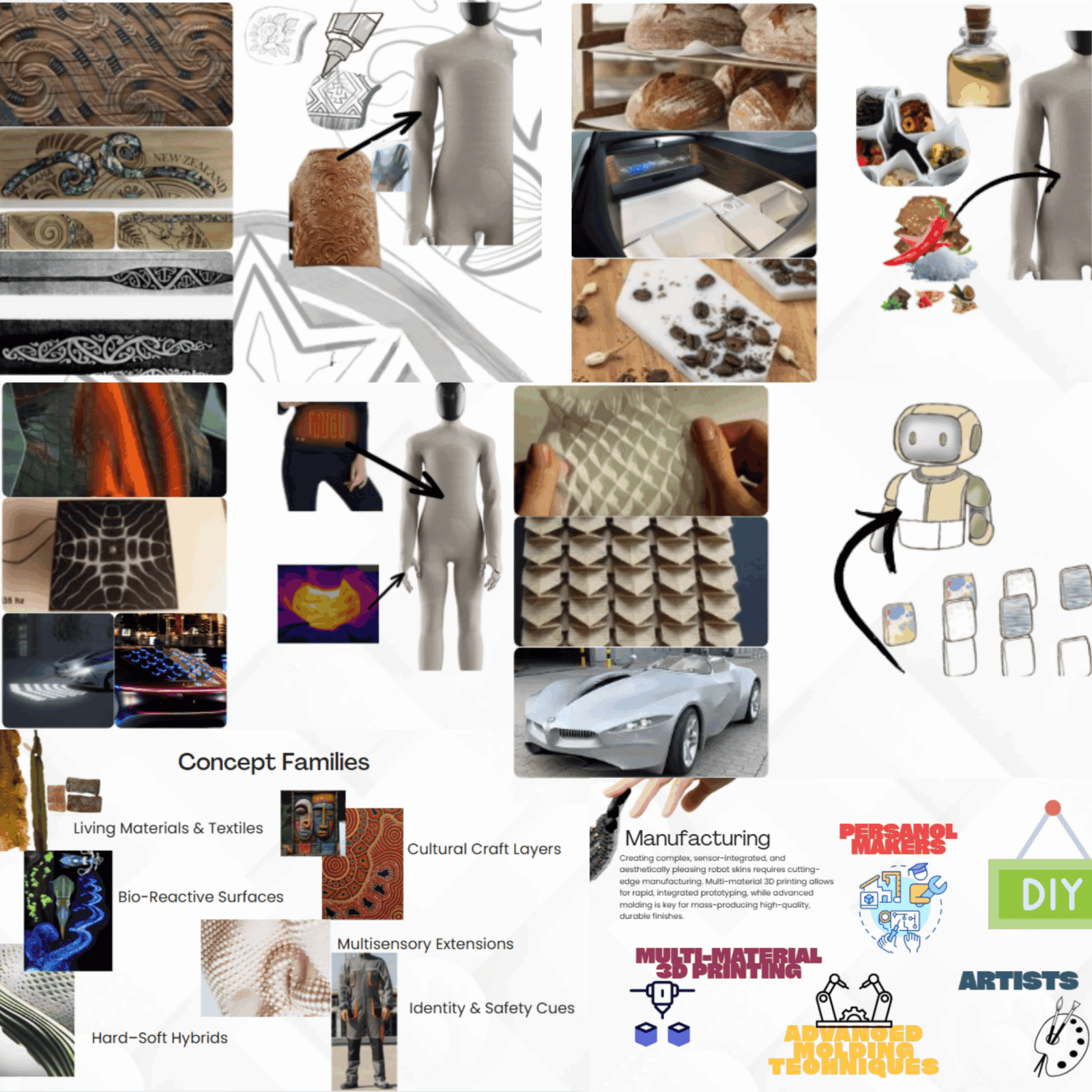
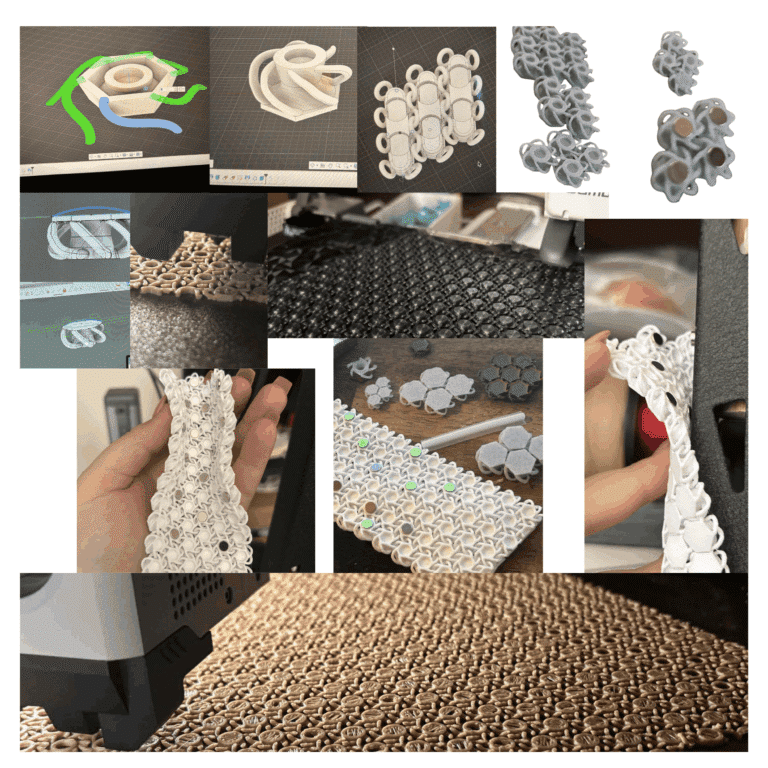
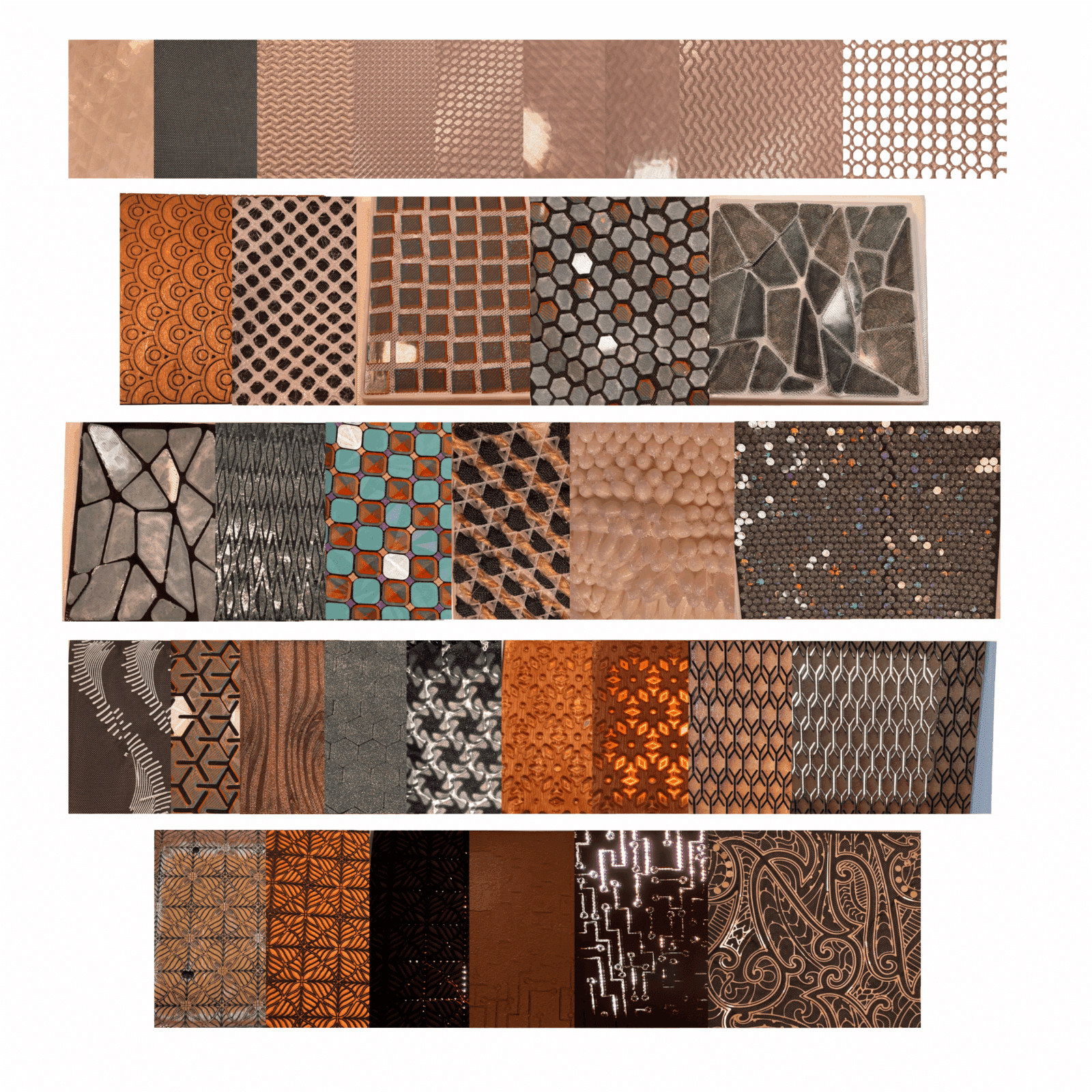
Compiled photos of my mood board

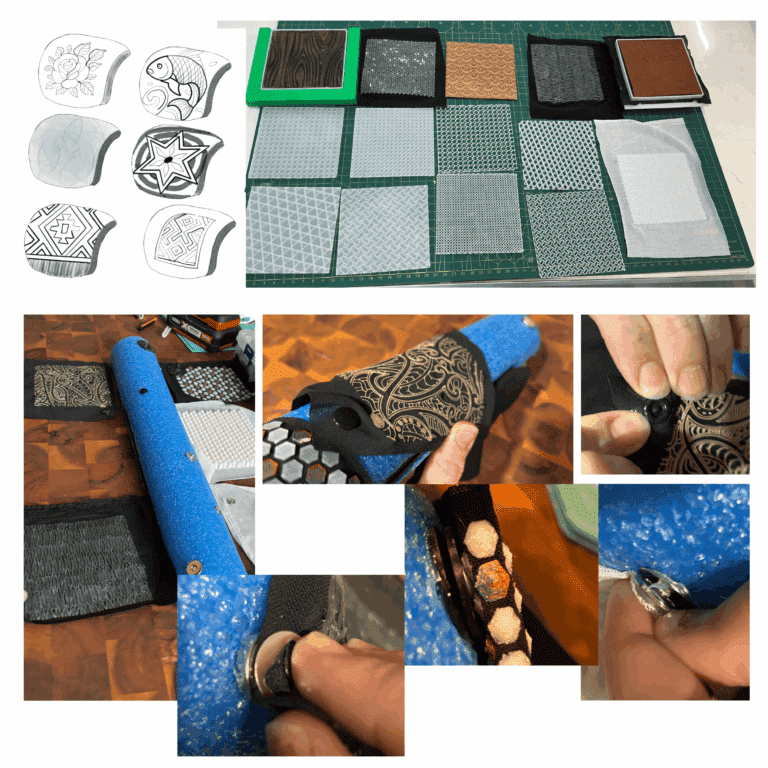
Prototyping Fasteners and Buttons

Majority of the buttons and fasteners I was trying were easy to clip to the material and the analog. However, when I tried to remove the material from the analogs, The fastener stayed behind on the analog and the material ended up with a hole in it, another issue was that the material kept sliding around and I realised to have the material not sliding around or hanging off the analog I would have had to have multiple fasteners lining the analog which would take away from the overall look I was trying to accomplish.
Magnalock prototyping

Prototyping Magnalock

Through working with the materials as a starting point for developing prototypes, I realised that with the metal filaments, I could create designs that were easy to clean and interchange, all because they were magnetic. However, due to the fabric, the magnets weren’t adhering to the designs properly and were being left behind on the analog. Then I thought of NASA Fabric. The concepts I found online were okay, but harder to customise. I realised pretty quickly that I would have to create my own version with the design integrated into the fabric itself, and by doing so, I could adjust the designs based on the magnets that were being used.

FABRICATION & ASSEMBLY PROCESSES

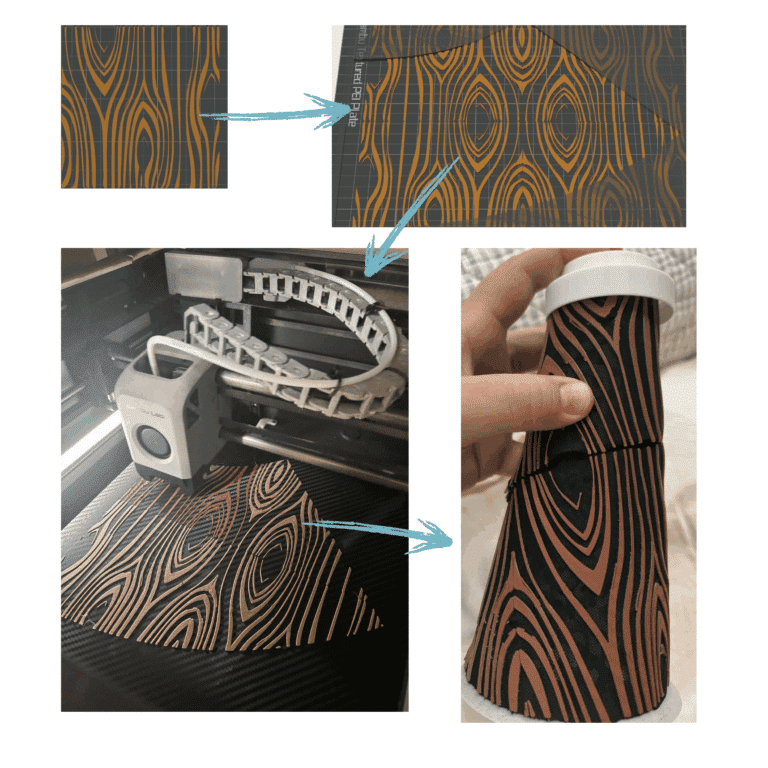
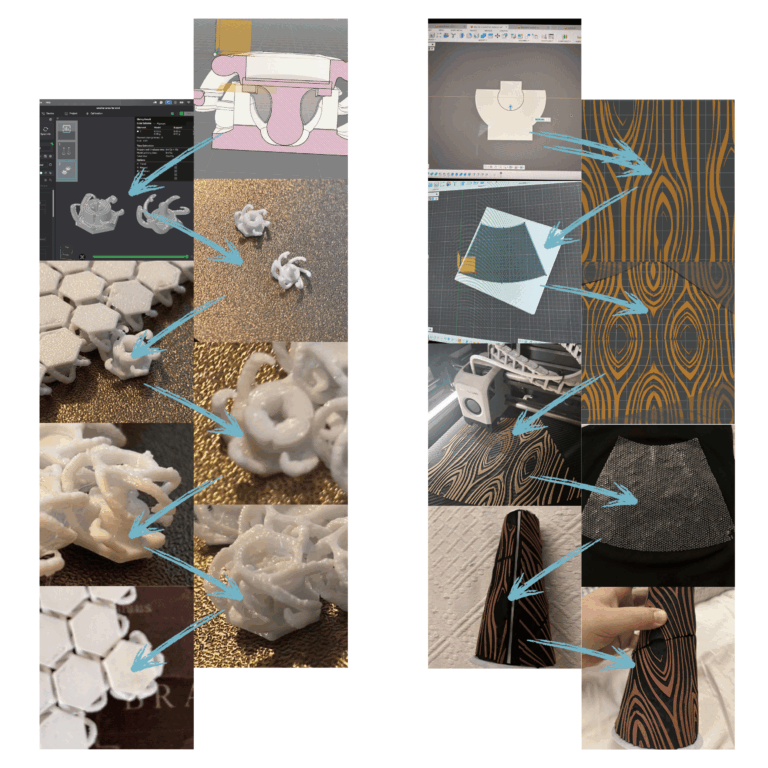
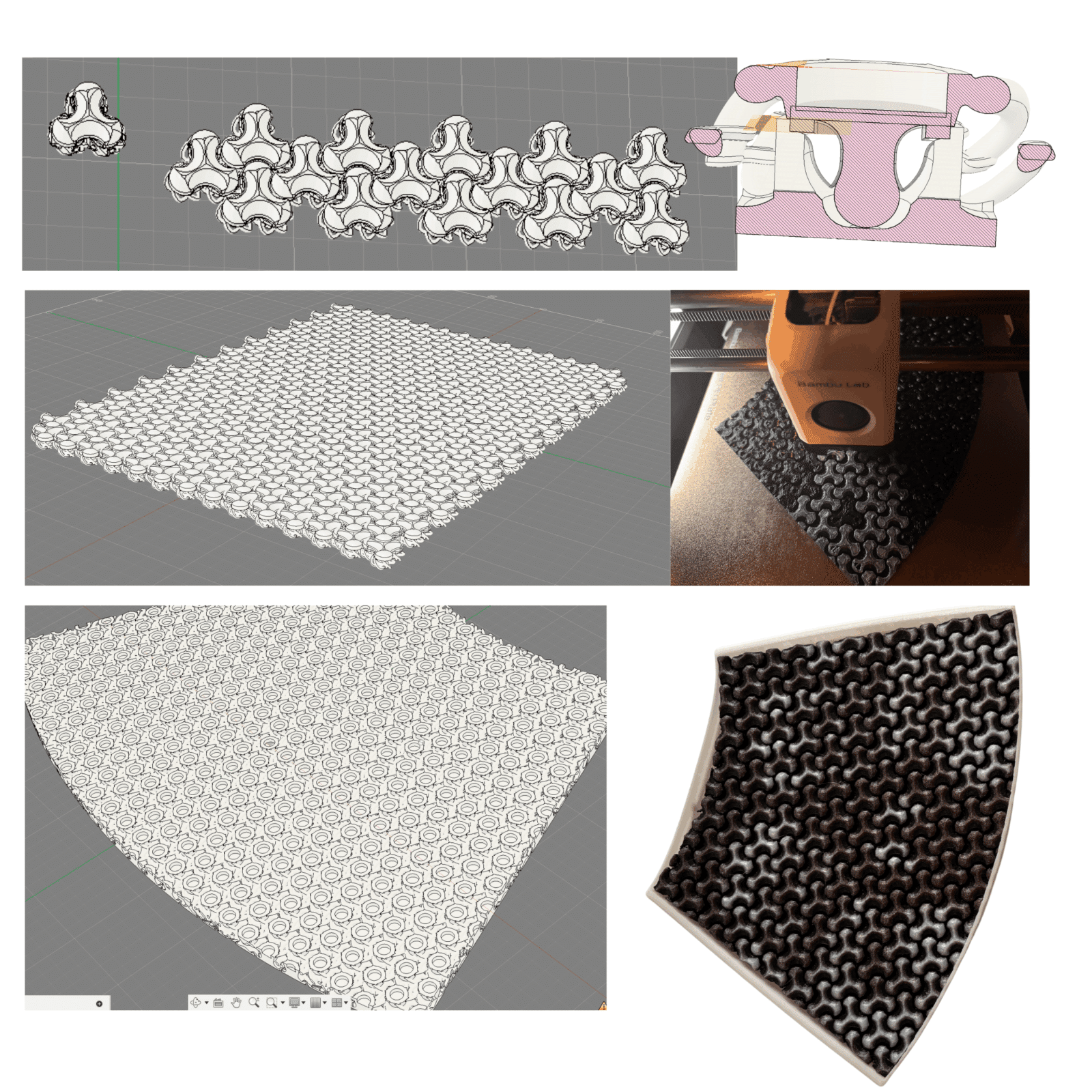
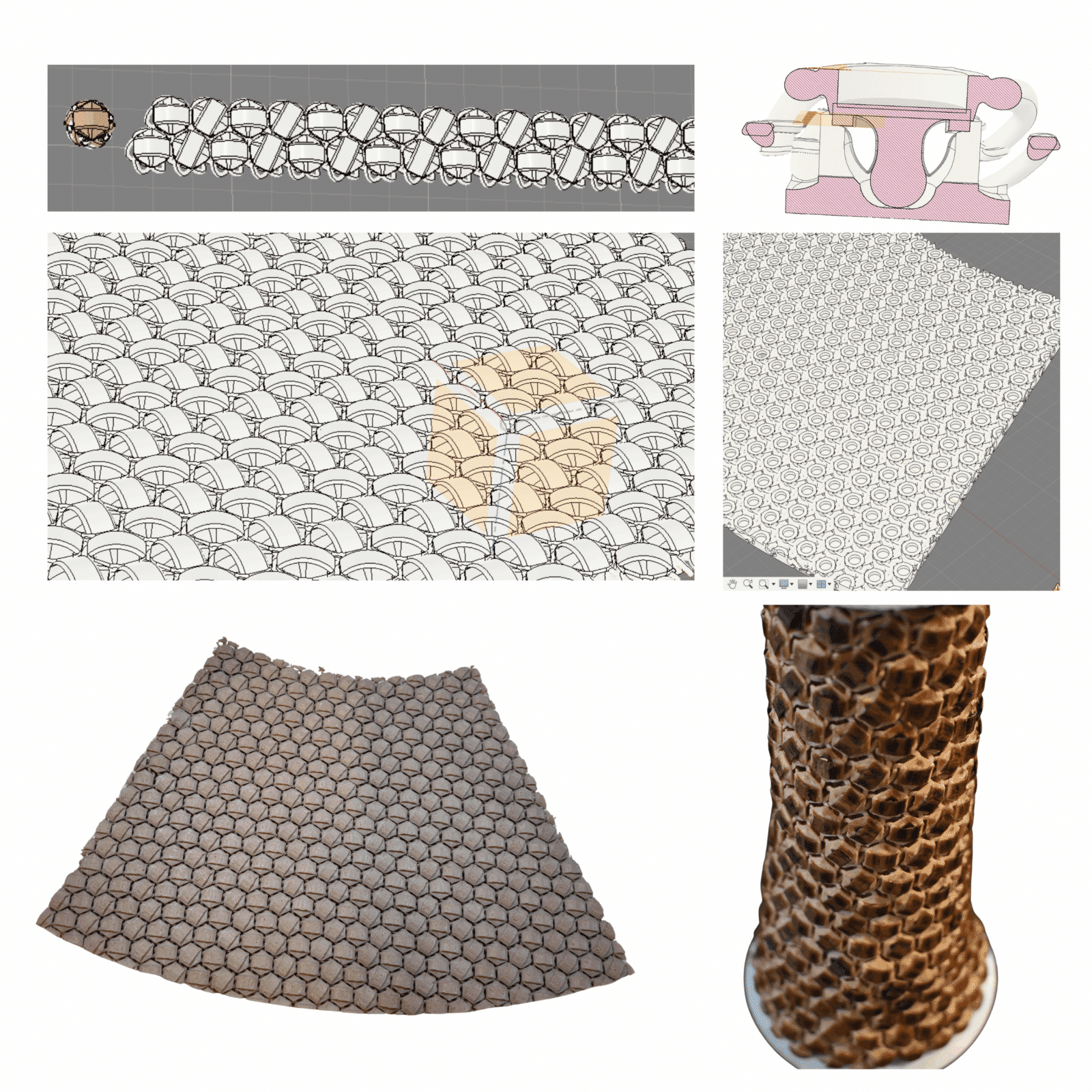
Compiled photos of fabricating material from SVG Files on the printer to printing and forming on the analog.

Fabrication Process

The Magna-Lock™ fabrication workflow integrates additive manufacturing and parametric design processes to enable infinite variation and user-generated textures:

Step 1 – Source / Generate Visual Pattern
The user selects or captures an image or design (e.g., photograph, illustration, or natural texture). This image is converted into a scalable vector graphic (SVG) using image generation software. The user can adjust the SVG’s contrast, density, and pattern depth to achieve the desired visual and tactile effect.

Step 2 – 3D Conversion & Slicing
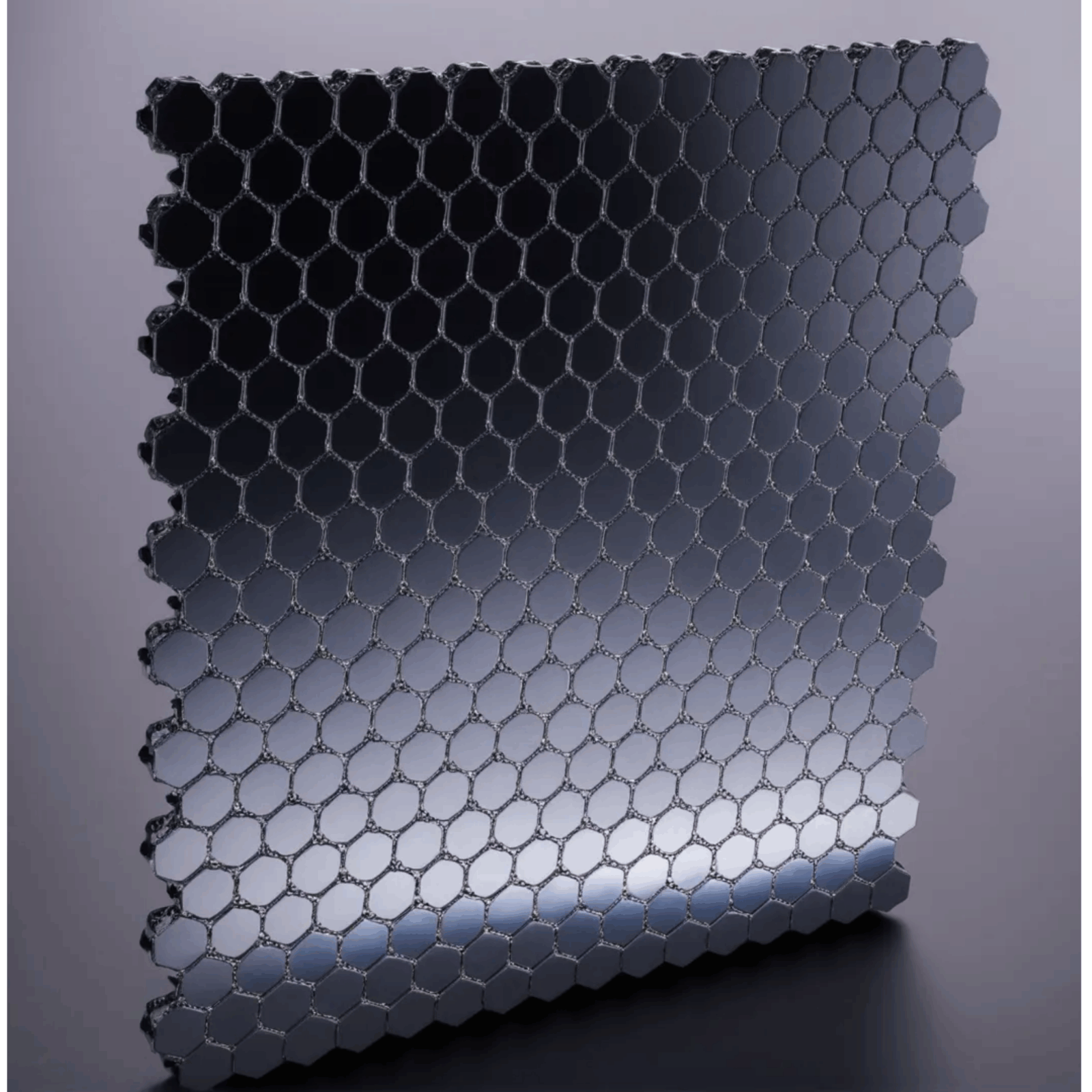
The SVG is converted into an STL and imported into a slicing software environment. A custom mesh frame—inspired by NASA’s woven metallic fabric structures—is overlaid beneath the SVG pattern. A negative mesh mask is applied to ensure precise cutting of pattern cells, functioning like pixel segmentation in a digital display. The resulting mesh-texture combination is merged (Mesh-Boolean) and flipped before printing, ensuring correct layering and texture orientation.

Step 3 – 3D Printing & Material Selection
Users can select from an extensive and ever-expanding range of 3D-printable materials:
* TPU / TPE: for soft, elastic finishes
* PCTG / PETG / PLA / PLA-Silk: for semi-rigid decorative elements
* Power mesh or tulle substrate: for structural flexibility
* Bioluminescent/Thermochromic/glow-in-the-dark filaments: for ambient and safety lighting

The Result:
A fully customisable textile-like panel that can be tuned to suit soft, semi-soft, or rigid robotic applications.
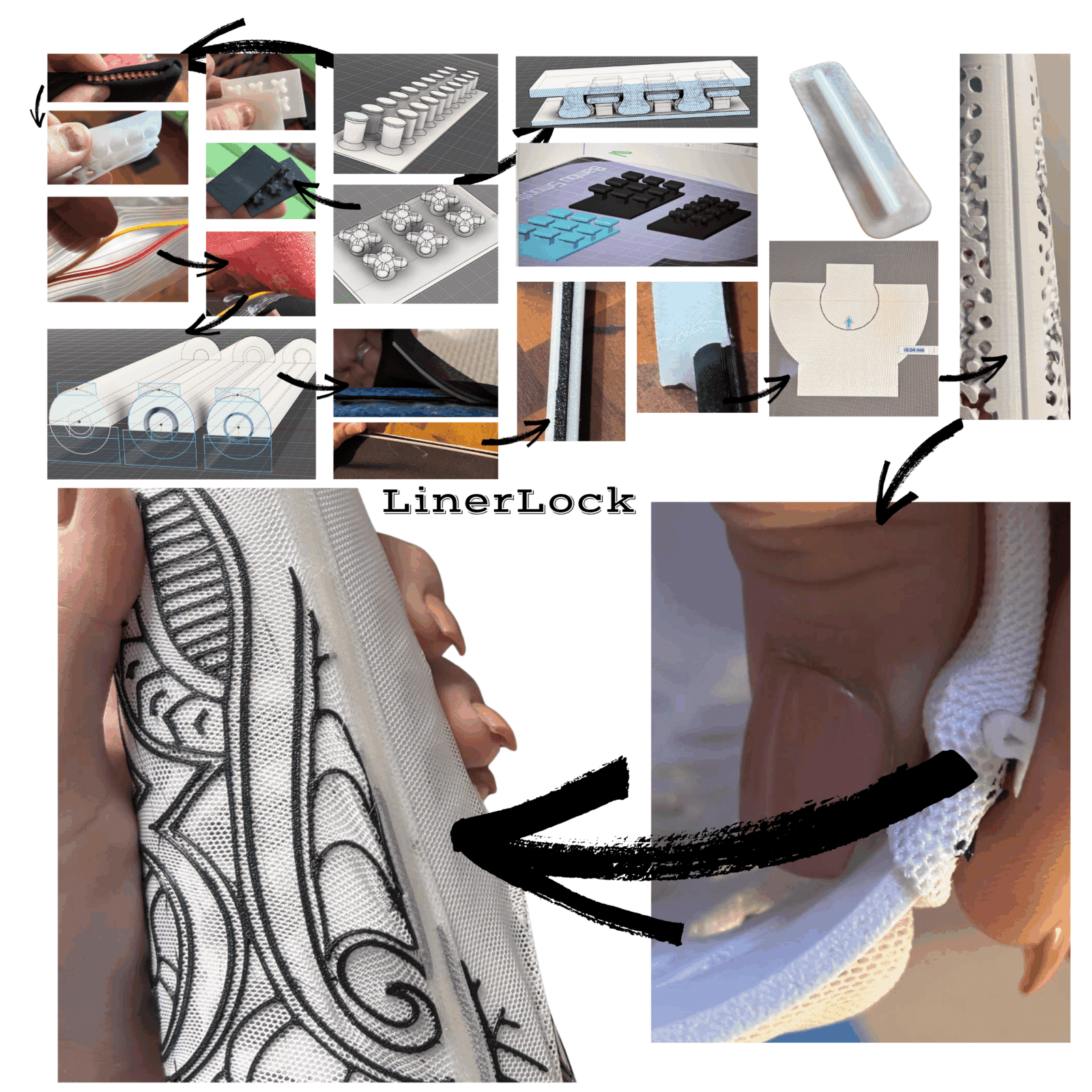
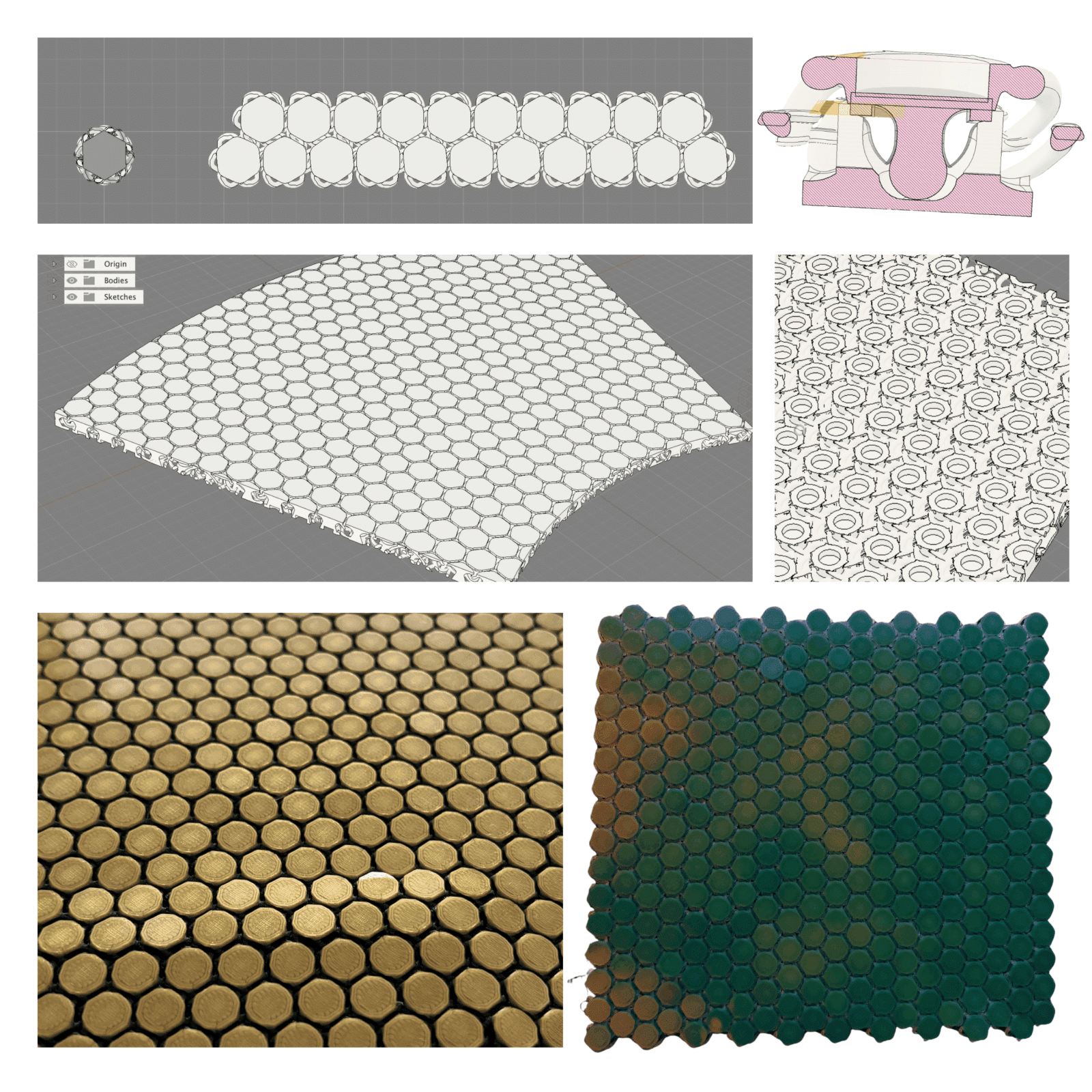
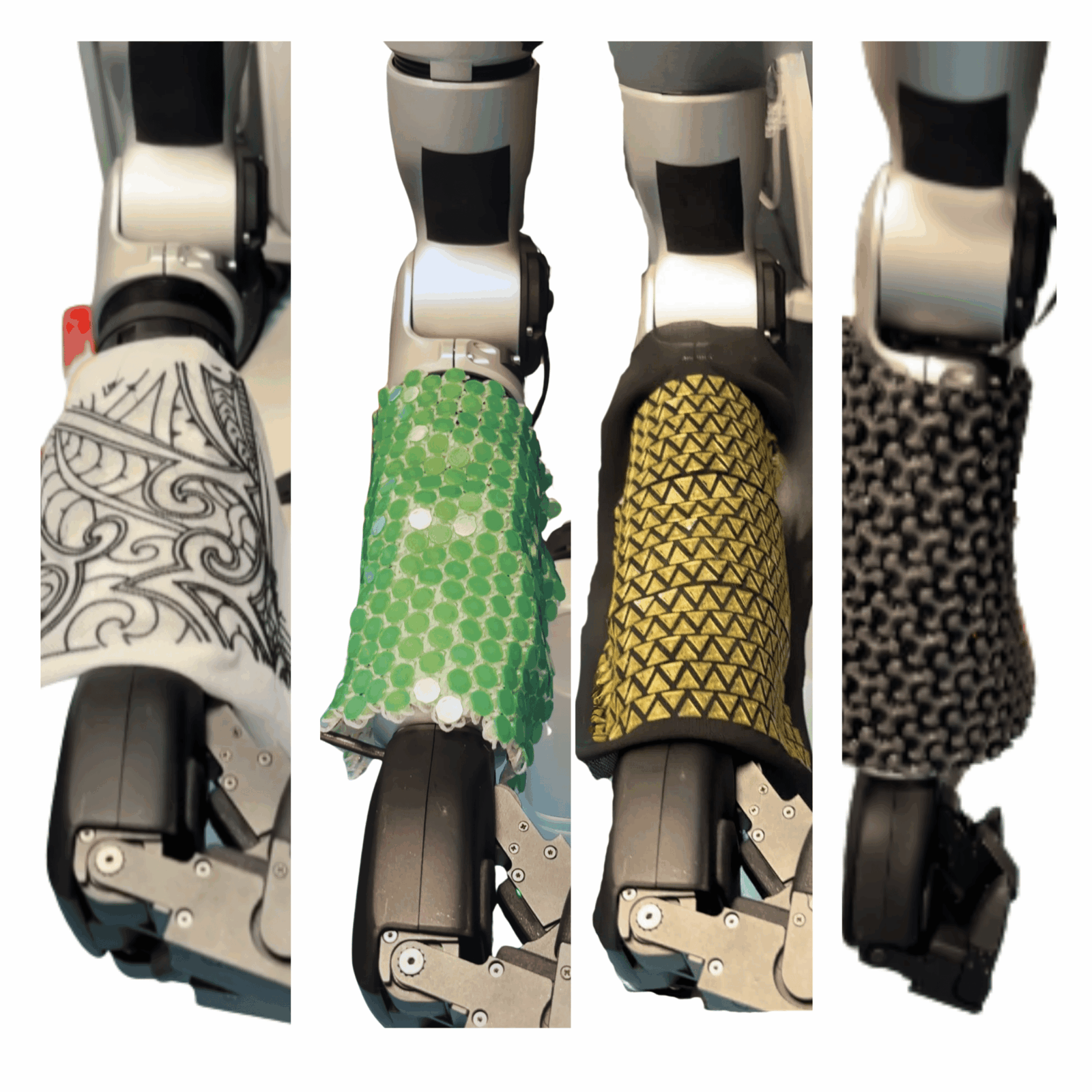
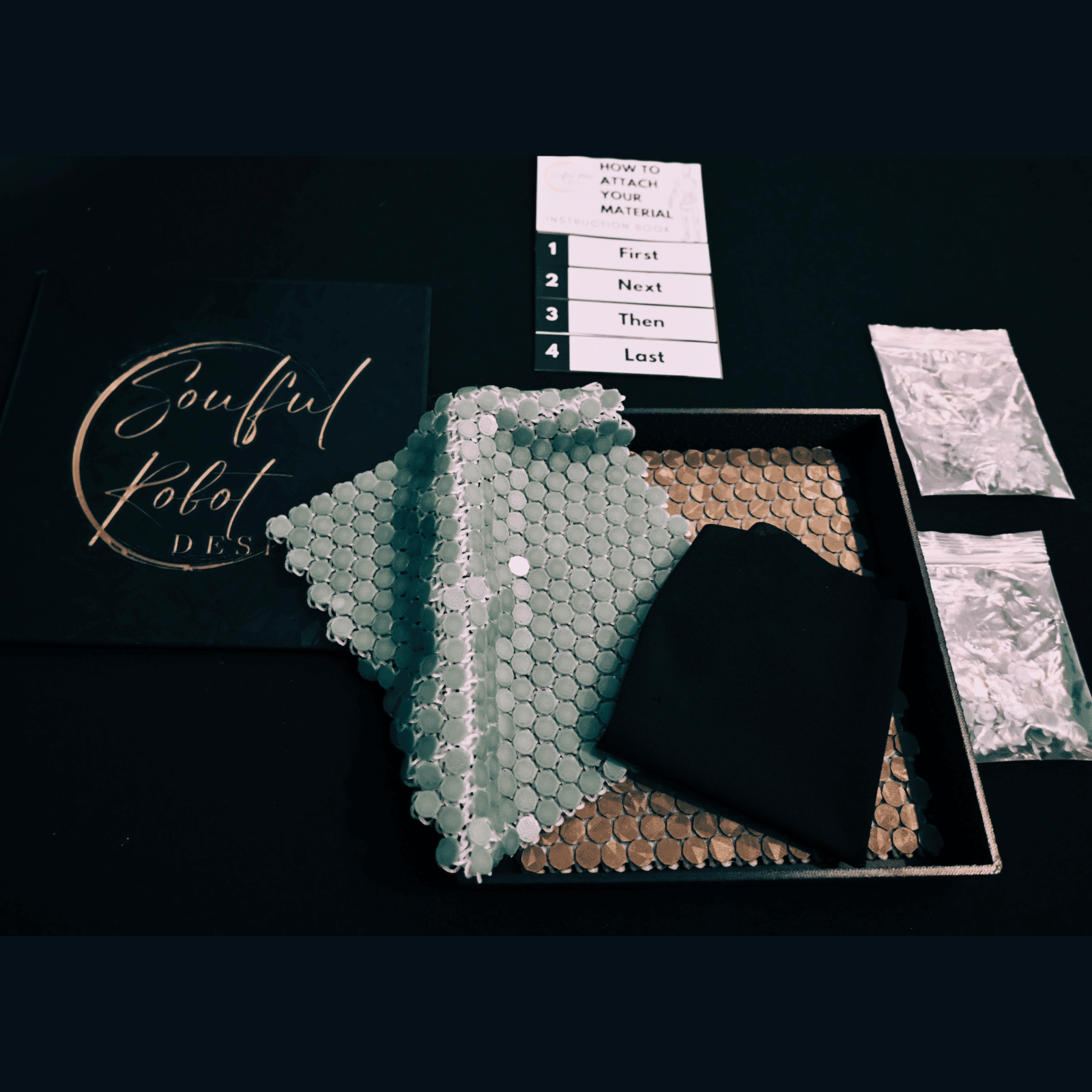
Compiled photos of Assembling the materials onto the analog

Assembly Process

1. Soft System – Liner-Lock
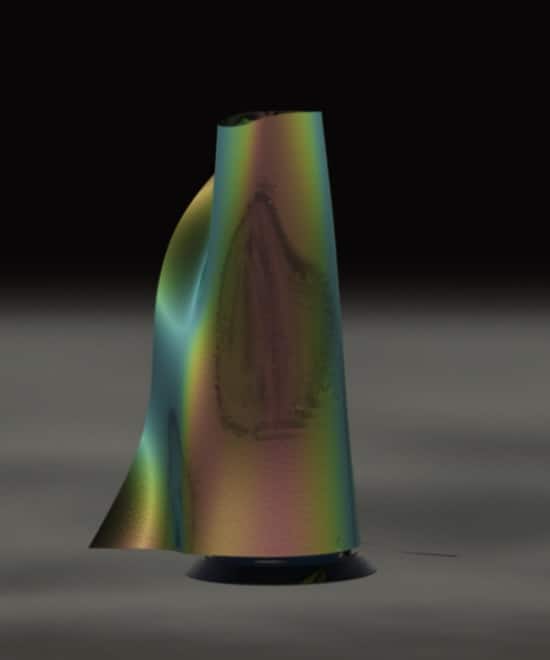
Uses a locking bead track to secure printed fabric layers to the robot’s frame. Beads may be integrated into the exoskeleton or applied externally via double-sided heat-resistant adhesive. The system allows tool-free removal and replacement, enabling artistic and maintenance-based re-skinning.

2. Semi-Soft System – Magna-Lock
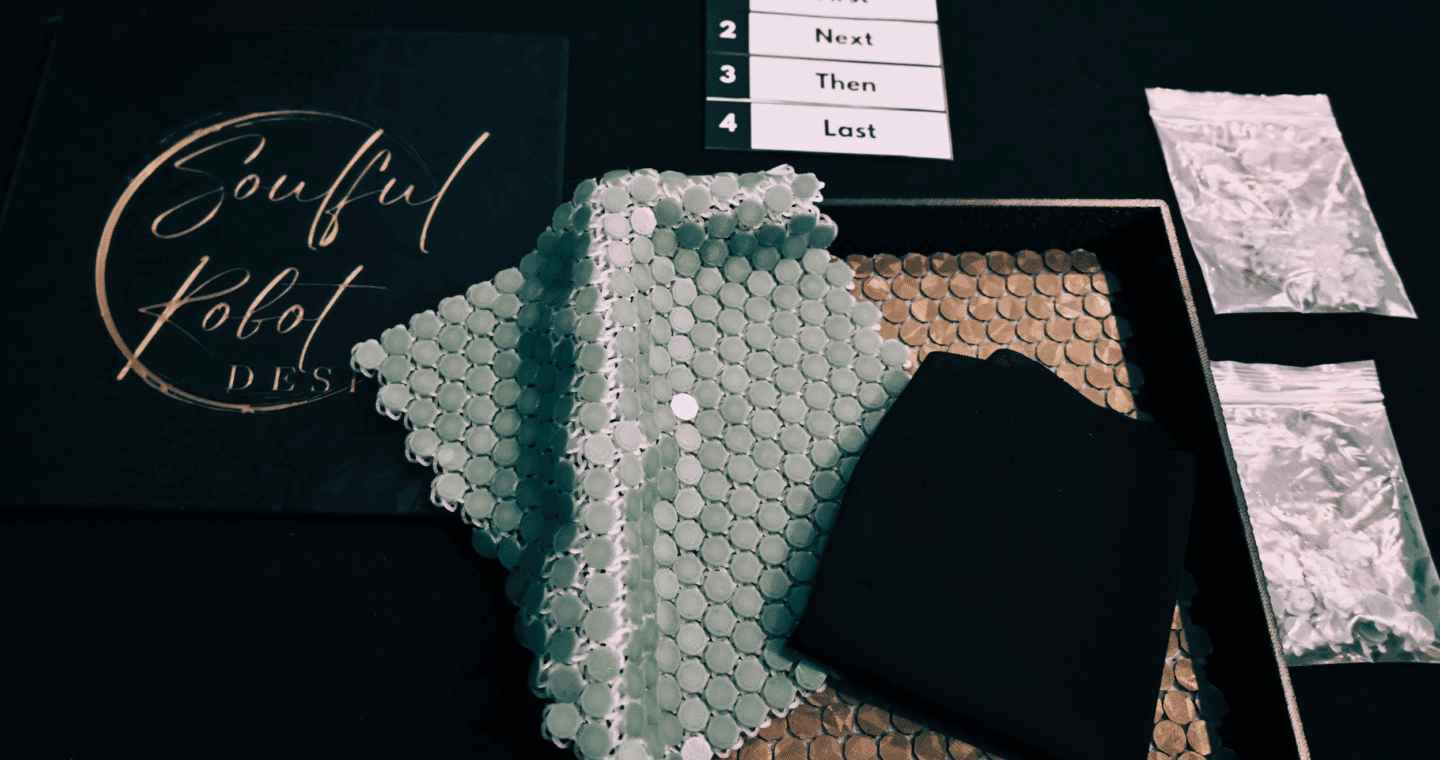
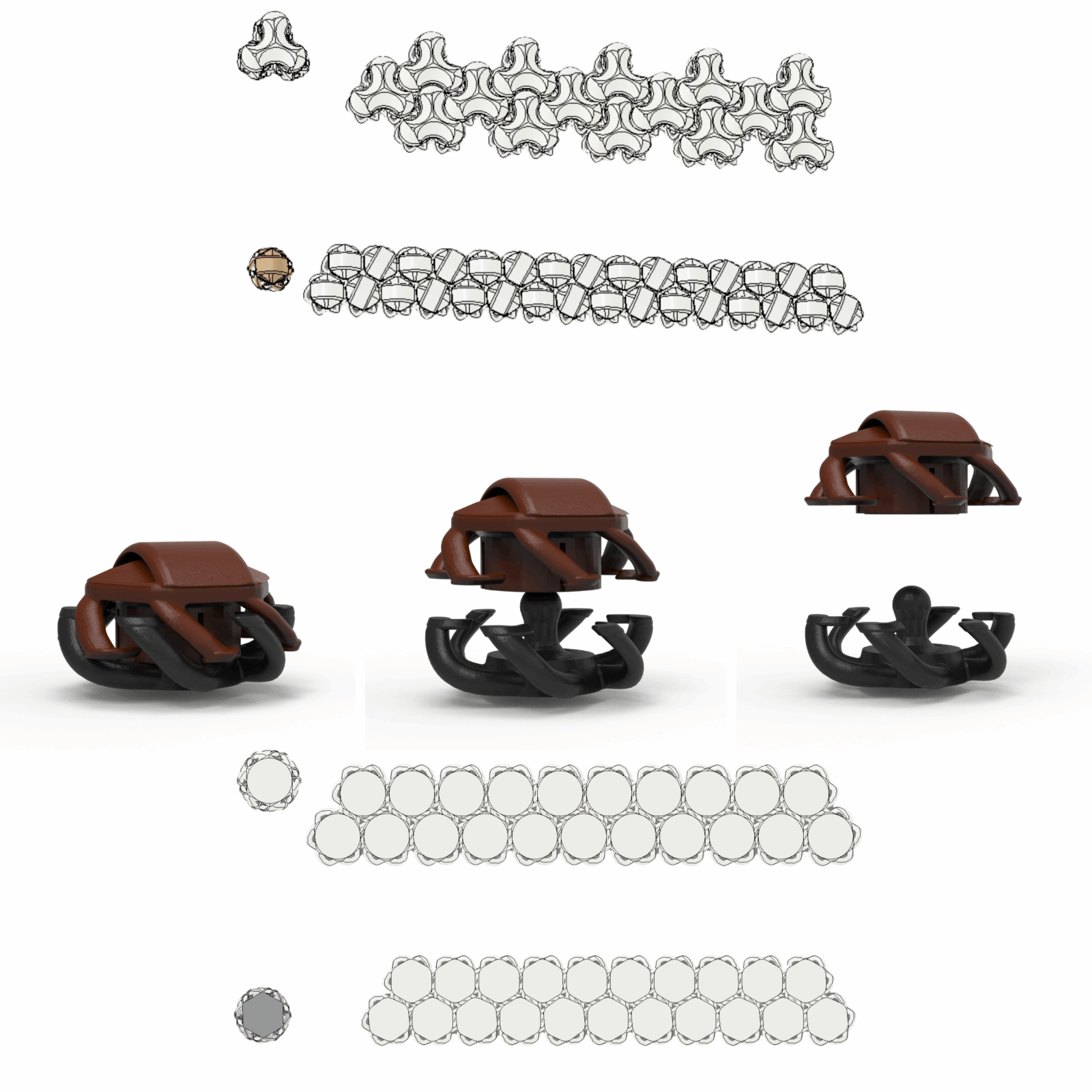
Incorporates small embedded magnets heat-pressed into the fabric’s rear surface after printing. These magnets interface with magnetic metallic subframes on the robot, allowing snap-fit placement and micro-actuation.
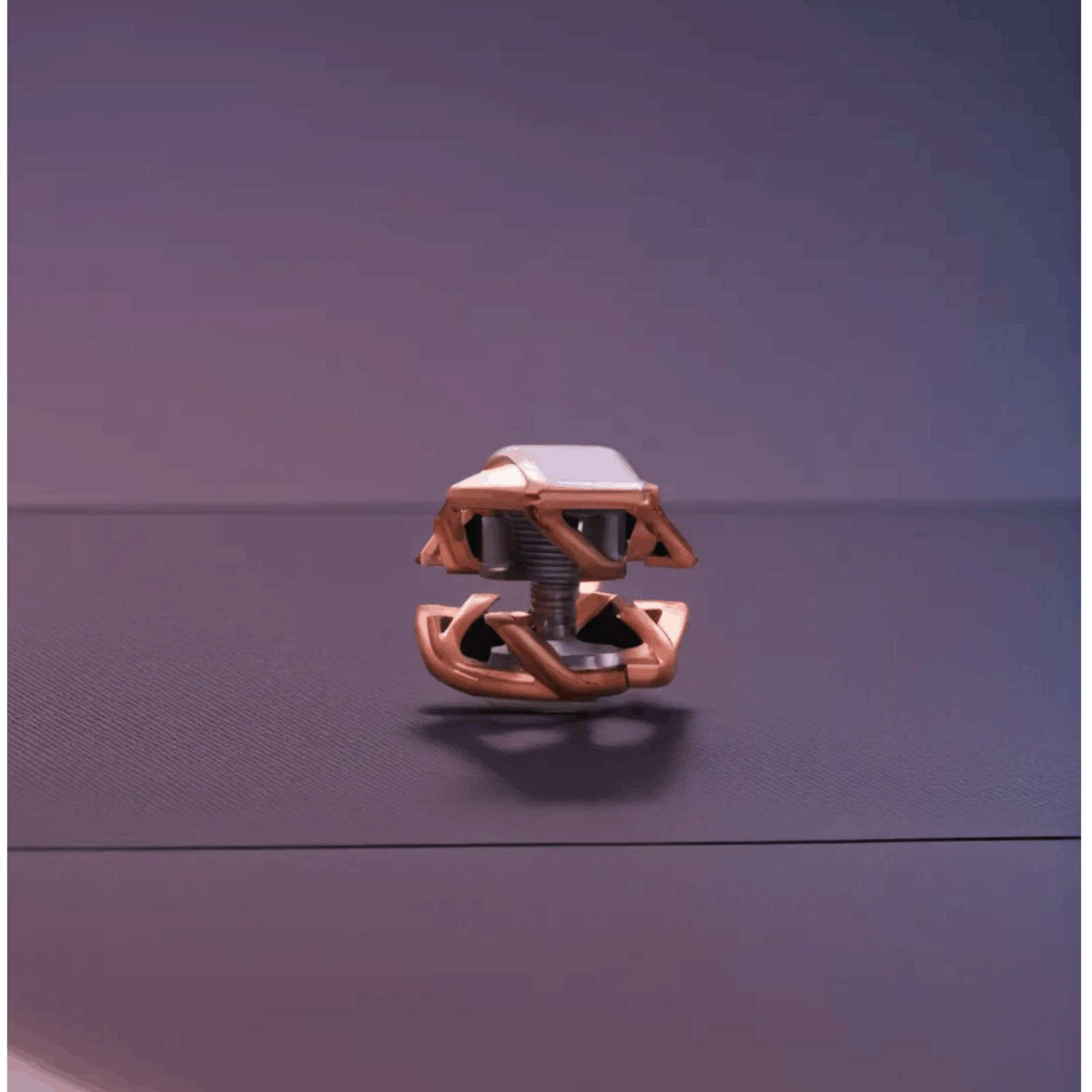
Optional “spider links” interconnect the tiles, allowing flexible scaling over curved or cylindrical forms (arms, torsos, etc.). This provides a modular tessellated skin that is both mechanically stable and expressively dynamic.

Expressive & Safety Functionality
* The Magna-Lock system advances beyond visual aesthetics — it enables emotional and communicative cues in line with empathetic design research principles:
* Micro-Motion Signals: Subtle rippling or contraction of the surface to indicate pre-movement (“the robot is about to move its arm”).
* Lighting Cues: LED and EL-wire integration through magnetic pathways for soft glows or directional pulses.
* Emotional Colour Shifts: Achieved via thermochromic or bioluminescent filaments for adaptive environmental feedback (e.g., calming warm tones, alert signals).

Human–Factors Integration
* Comfort & Safety: Rounded edges, flexible mesh layers, and tactile textiles reduce perceived threat and improve approachability.
* Cognitive Communication: Predictive lighting and motion provide non-verbal affordances (the robot “shows intent”).
* Cultural Adaptability: Users or artists can design unique skins that reflect cultural aesthetics or personal values, bridging robotic uniformity with human diversity.

Design Implications
Magna-Lock™ redefines how humanoid robots communicate, not through speech or programming, but through surface behaviour. By merging user-driven design, additive manufacturing, and sensory expressivity, it delivers a humanised skin system that is tactile, adaptive, and emotionally intelligent.

BILL OF MATERIALS

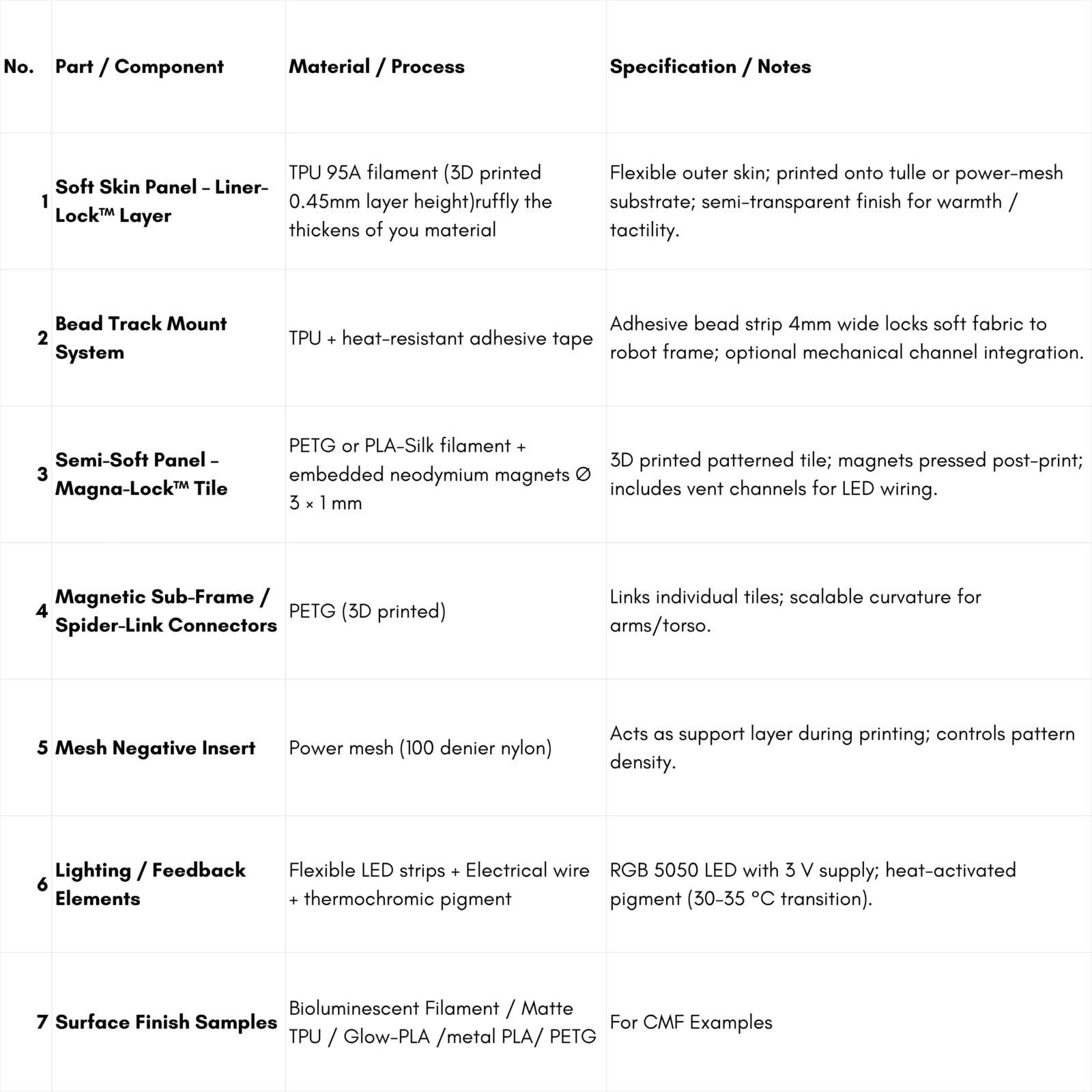
Table of Materials for manufacturing the products

Project Video

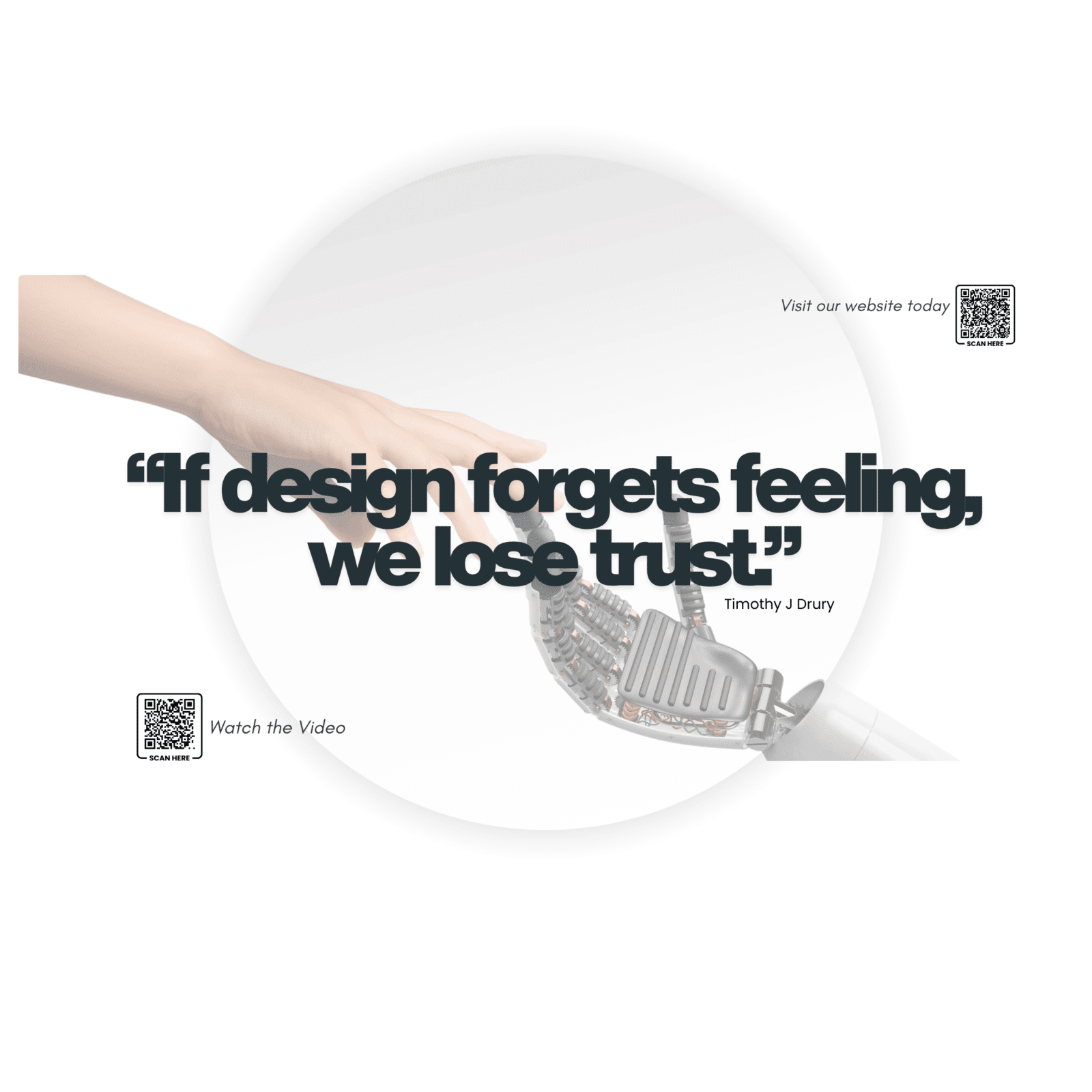
Image of human and robotic hand with a quote

Timothy Jon Drury
Timothy is an industrial designer passionate about pushing the boundaries of additive manufacturing and infusing technology with a human touch. With a decade of experience in hospitality and logistics, he designs products that enhance everyday interactions and build trust. When he’s not designing or exploring new fabrication techniques, you’ll find him traveling, riding motorcycles, or cooking up something sweet.